The Most Valuable Recruiting Search I Ever Conducted Didn't End With a Hire
For forty years, I thought I knew exactly how to measure recruiting success.
Did we make the hire?
If the answer was yes, the search was a success.
If the answer was no, it wasn't.
Simple.
Or so I thought.
Several years ago, we worked on a search that consumed weeks of conversations, sourcing, interviews, market research, and follow-up.
The client was engaged.
Candidates were interested.
The market was moving.
And yet the position never filled.
No offer was accepted.
No placement fee was earned.
No one celebrated.
By every traditional recruiting metric, the search was a complete failure.
Looking back, I believe it was one of the most valuable recruiting searches of my career.
“Every search should make the next search easier.”
Why?
Because that search taught us things we could never have learned from a successful placement alone.
It taught us what compensation the market actually expected.
It revealed how small the local talent pool really was.
It showed which sourcing channels consistently produced qualified candidates — and which ones simply generated activity.
It exposed job requirements that quietly eliminated exceptional talent before conversations even began.
The next time we recruited for a similar role, we didn't start from zero.
We already understood the market.
We knew where to look.
We knew which channels deserved our budget.
We knew which compensation ranges attracted attention.
We knew which expectations needed to change.
Every search had made the next search easier.
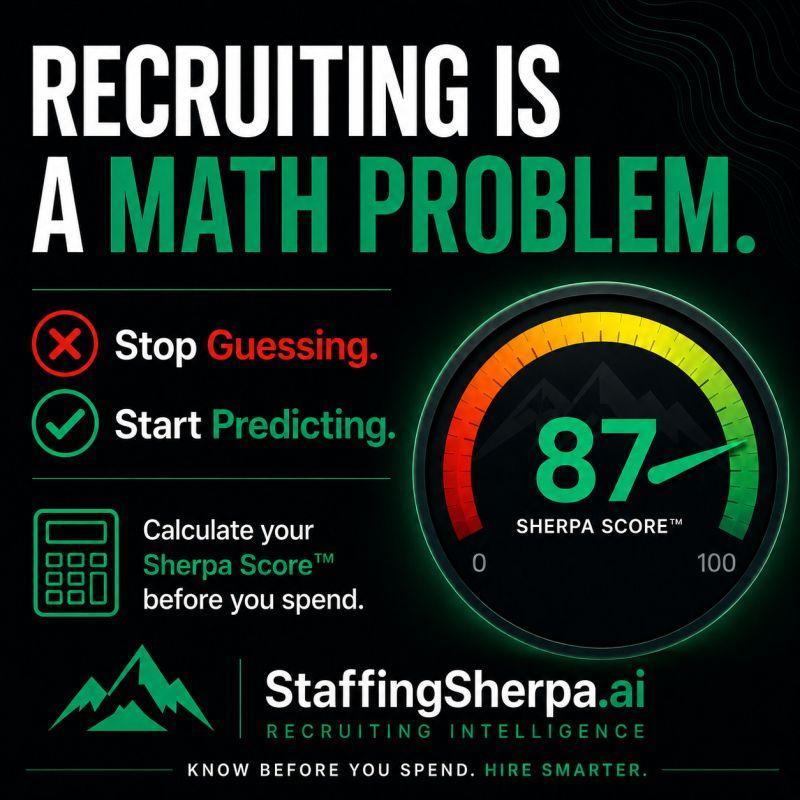
And that's when I realized something that fundamentally changed the way I think about recruiting.
Most organizations don't have a recruiting problem.
They have an organizational memory problem.
Every search teaches the market something about your organization.
The real question is whether your organization learns anything from the market.
Every Search Generates Signals
Each engagement teaches you something the market won't tell you anywhere else.
Compensation Expectations
Candidate Supply
Geographic Realities
Channel Performance
Response Rates
Organizations spend thousands of dollars acquiring those insights.
Then they throw them away.
The position is filled.
The spreadsheet is archived.
The recruiter moves on.
Six months later, the next search begins almost exactly where the previous one started.
The organization learns surprisingly little.
Imagine if every sales conversation disappeared after the contract was signed.
Imagine if every marketing campaign ended without measuring what worked.
Imagine if every investment firm forgot why it bought a company.
No successful organization would operate that way.
Yet recruiting often does.
The strongest hiring organizations do something different.
They capture what the market teaches them.
They organize it.
They challenge assumptions.
They improve their forecasting.
They refine their sourcing strategy.
They build institutional knowledge instead of isolated transactions.
Over time, every search makes the next search smarter.
Every hiring decision becomes more informed.
Every recruiting dollar works harder.
Their Recruiting Intelligence compounds.
For years, I believed the most valuable outcome of a recruiting search was a successful hire.
Today, I'm no longer convinced.
Sometimes the most valuable outcome is the intelligence that changes every hiring decision that follows.
Sometimes a search that never results in a placement creates an advantage that lasts for years.
The hire fills one position.
Recruiting Intelligence improves every position that follows.
That's how great recruiting organizations compound their advantage.
And that may be the future of recruiting.
Recruiting Intelligence Starts Before You Spend.
The strongest hiring organizations don't simply fill positions. They build intelligence that compounds with every search.
Every search should make the next search easier.
Explore StaffingSherpa.ai